


As legal teams increasingly integrate legal AI into document review, compliance workflows, contract analysis, and early case assessments, maintaining the highest standards of accuracy and reliability has become essential. AI can accelerate review and improve consistency when supported by disciplined quality assurance. Without strong validation and continuous monitoring, advanced systems can lose precision over time and introduce risks that legal teams cannot accept.
Effective governance centers on three pillars: model validation, drift detection, and ongoing audits. These practices ensure that legal AI remains accurate, defensible, and aligned with changing data patterns, regulatory expectations, and client needs.
1. Validating Legal AI Models: Establishing a Defensible Baseline
Before deploying any AI-driven tool in a legal workflow, teams must assess whether the model performs consistently across the types of documents, matters, and jurisdictions they support. Initial validation creates the benchmark for future performance measurement.
Robust validation requires experienced legal team support, which can include:
- Reviewing training data to confirm that it reflects real matter complexity, including privilege indicators, regulatory content, multilingual materials, and sensitive information.
- Evaluating precision, recall, and error rates in the context of legal materiality.
- Testing scenarios that involve ambiguous privilege cues, mixed content, and evolving document types.
- Calibrating outputs with experienced attorney reviewers to ensure alignment with defensible legal judgment.
Strong validation builds trust. Legal teams must be confident that AI enhances accuracy rather than introducing variability.
2. Detecting Model Drift: Staying Ahead of Performance Degradation
A well-validated model will not remain static. Over time, changes in document formats, language patterns, regulations, or client workflows can reduce accuracy. This shift, commonly called model drift, must be addressed early to avoid broader impacts.
Drift detection includes:
- Continuous sampling of AI classified documents for human review.
- Monitoring trends in false positives and false negatives to identify performance shifts.
- Setting thresholds that trigger retraining or adjustments when accuracy declines.
- Conducting contextual analysis to determine whether drift is caused by new document patterns, regulatory changes, or inconsistent data.
Early detection prevents small errors from developing into systemic issues that affect review outcomes.
3. Ongoing Audits: Ensuring Long-Term Defensibility and Consistency
Legal AI requires structured and continuous oversight. Regular audits ensure that the system remains aligned with matter requirements, review protocols, and legal standards.
Effective audit processes require legal team support and typically include:
- Periodic evaluations of model metrics, sampling results, and error trends.
- Alignment checks to confirm consistency with privilege frameworks, regulatory updates, and client-specific instructions.
- Transparent documentation of performance logs, model updates, and audit results to support defensibility.
- Human in-the-loop validation to reinforce accuracy and guide improvements.
Audits create a dependable feedback loop that strengthens reliability and ensures that AI continues to support legal workflows responsibly.
Maintaining High Standards in Legal AI
Legal teams rely on accuracy, consistency, and defensible processes. By investing in model validation, drift detection, and routine audits, organizations can ensure that legal AI performs to the standards their work requires and supports more efficient, precise review practices.
Contact Baer Reed to learn how our legal support services help teams maintain quality and consistency when integrating legal AI into their workflows.





 Mr. Reyes graduated with honors from the Ateneo de Manila University, where he received the Procter and Gamble Student Excellence Award. He obtained his Juris Doctor degree from the Ateneo de Manila School of Law. During law school, Mr. Reyes was part of the Philippine delegation to the Willem C. Vis International Commercial Arbitration Moot held in Vienna, Austria. He was also a member of the Ateneo Society of International Law and the St. Thomas More Debate Society. He completed his internship at the Public Attorney’s Office. He wrote a thesis entitled: “To Kill A White Elephant: An Analysis of the Fiduciary Exception to the Corporate Attorney-Client Privilege”. Mr. Reyes is admitted to practice law in the Philippines and the State of New York.
 Matthew Hersh earned a B.A. in Political Science from Columbia University in 1990 and graduated cum laude from Georgetown University Law Center in 1999. He also holds a master’s degree in international relations from the Georgetown University School of Foreign Service.
 Cap. Avi Levak (Res. IDF) graduated from from Israel’s prestigious Ben-Gurion University of the Negev with a Bachelor of Science in Computer Science and Mathematics. He is also a Leadership and Communication coach trained in TuT coaching by Alon gal in Israel. Avi specializes in high-level, in-depth analysis of business and client needs, within systems and software strategy and architecture.
 Ms. Lardizabal-Manzano is a graduate of San Sebastian College-Recoletos, where she earned her B.A. in Political Science. In 2003, she received her law degree from Lyceum of the Philippines and was admitted to practice law in 2004.
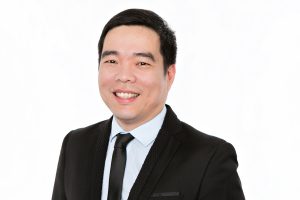 Mr. De Guzman graduated from San Beda College with a degree of Bachelor of Arts Major in Economics and received his law degree from San Beda College of Law. He is multilingual and is fluent in three languages: Chinese, Filipino, and English. He was admitted to the Philippine Bar in 2003.
 Ms. Aquino-Batallones obtained a Bachelor of Arts degree in Development Studies (with Minors in Global Politics and Hispanic Studies) from the Ateneo de Manila University. In 2011, she received her Juris Doctor degree from Ateneo de Manila University School of Law. During law school, she interned at Romulo Mabanta Buenaventura Sayoc & de los Angeles then became an intern of Ateneo Legal Services Center’s Clinical Legal Education Program.
 Ms. Cruz-Anonuevo graduated cum laude and top nine in her batch from Miriam College with a degree of Bachelor of Arts in InternationalStudies. She obtained her Juris Doctor degree from Ateneo de Manila University School of Law in Rockwell. During law school, she interned in Rivera, Santos, Maranan & Associates. She was also part of Ateneo’s Labor Law Bar Operations. She wrote her thesis on, “Stealing Privacy: Limitations on Media’s Photographic Invasion.,” Ms. Cruz-Anonuevo is admitted to practice law in the Philippines.
 Ms. Tyler graduated cum laude from Georgetown University and received her law degree, cum laude, from Georgetown University Law Center. During law school, she interned at the United Nations Economic Commission for Europe. She also worked on The Tax Lawyer journal and was a member of the award-winning Barristers’ Council Mock Trial Team. Ms. Tyler is admitted to practice law in the State of California and the District of Columbia.