 Matthew Hersh earned a B.A. in Political Science from Columbia University in 1990 and graduated cum laude from Georgetown University Law Center in 1999. He also holds a master’s degree in international relations from the Georgetown University School of Foreign Service.
After law school, Mr. Hersh went to work for the Washington DC office of Jenner & Block LLP, one of the nation’s leading law firms for commercial and appellate litigation. While at Jenner, he was a member of the briefing team for several landmark Supreme Court cases, including MGM v. Grokster (2005), which established the liability of peer-to-peer file-sharing companies for infringing content, and Rumsfeld v. Padilla (2004), one of the first legal challenges to military detention policies to reach the Court in the post-9/11 era. As part of Jenner’s copyright litigation practice, Mr. Hersh helped to formulate the music industry’s initial strategy for combatting music piracy online and eventually oversaw the implementation of a groundbreaking settlement with an overseas website operator that resulted in the first-ever copyright “filter” in a commercial peer-to-peer music network. Mr. Hersh has also maintained an extensive public interest and pro bono practice throughout his legal career, including the successful reversal, in a habeas corpus action, of the wrongful murder conviction of an indigent woman in South Carolina woman based on the ineffective assistance of her prior counsel.
After leaving Jenner and Block in 2010, Mr. Hersh began providing legal services and legal project management, as an independent attorney, to a wide range of clients within the legal services industry. From 2013 through2017, Mr. Hersh led a 50-person multinational team of lawyers at a Washington DC-based law firm, providing legal advice, legal research, and management activities in the course of developing legal databases for top legal providers and U.S. law firms. During this time, Mr. Hersh was responsible for the launch of three new legal databases tracking thousands of data points within publicly filed M&A and commercial financing agreements.
Since joining the Baer Reed team in 2017, Mr. Hersh has managed the company’s major legal project development activities and has been responsible for providing legal training and legal project oversight. Mr. Hersh, a licensed U.S. attorney, oversaw the creation of the company’s NDA Review service, training a team of attorneys to review and re-negotiate NDA agreements under the standards required by U.S. law and major corporate legal departments. Mr. Hersh has also overseen major legal research contracts with Fortune 100 clients, among them an extensive analysis of antitrust caselaw for one client and a comprehensive study of a wide range of corporate, insurance, and cannabis law questions for another client, in each case ensuring that legal research meets the needs of the client and is performed to the rigorous standards required by U.S. law.
Mr. Hersh joined Baer Reed in 2017 and is currently the Vice President, Product Development & Legal Project Management.










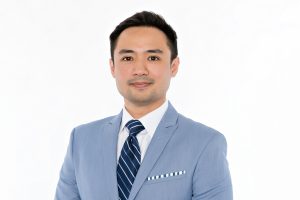 Mr. Reyes graduated with honors from the Ateneo de Manila University, where he received the Procter and Gamble Student Excellence Award. He obtained his Juris Doctor degree from the Ateneo de Manila School of Law. During law school, Mr. Reyes was part of the Philippine delegation to the Willem C. Vis International Commercial Arbitration Moot held in Vienna, Austria. He was also a member of the Ateneo Society of International Law and the St. Thomas More Debate Society. He completed his internship at the Public Attorney’s Office. He wrote a thesis entitled: “To Kill A White Elephant: An Analysis of the Fiduciary Exception to the Corporate Attorney-Client Privilege”. Mr. Reyes is admitted to practice law in the Philippines and the State of New York.
 Matthew Hersh earned a B.A. in Political Science from Columbia University in 1990 and graduated cum laude from Georgetown University Law Center in 1999. He also holds a master’s degree in international relations from the Georgetown University School of Foreign Service.
 Cap. Avi Levak (Res. IDF) graduated from from Israel’s prestigious Ben-Gurion University of the Negev with a Bachelor of Science in Computer Science and Mathematics. He is also a Leadership and Communication coach trained in TuT coaching by Alon gal in Israel. Avi specializes in high-level, in-depth analysis of business and client needs, within systems and software strategy and architecture.
 Ms. Lardizabal-Manzano is a graduate of San Sebastian College-Recoletos, where she earned her B.A. in Political Science. In 2003, she received her law degree from Lyceum of the Philippines and was admitted to practice law in 2004.
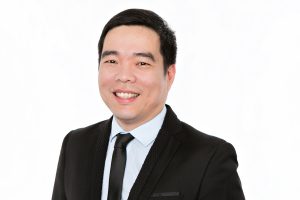 Mr. De Guzman graduated from San Beda College with a degree of Bachelor of Arts Major in Economics and received his law degree from San Beda College of Law. He is multilingual and is fluent in three languages: Chinese, Filipino, and English. He was admitted to the Philippine Bar in 2003.
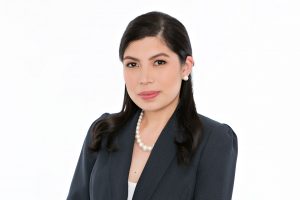 Ms. Aquino-Batallones obtained a Bachelor of Arts degree in Development Studies (with Minors in Global Politics and Hispanic Studies) from the Ateneo de Manila University. In 2011, she received her Juris Doctor degree from Ateneo de Manila University School of Law. During law school, she interned at Romulo Mabanta Buenaventura Sayoc & de los Angeles then became an intern of Ateneo Legal Services Center’s Clinical Legal Education Program.
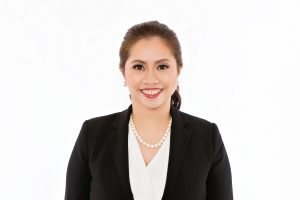 Ms. Cruz-Anonuevo graduated cum laude and top nine in her batch from Miriam College with a degree of Bachelor of Arts in InternationalStudies. She obtained her Juris Doctor degree from Ateneo de Manila University School of Law in Rockwell. During law school, she interned in Rivera, Santos, Maranan & Associates. She was also part of Ateneo’s Labor Law Bar Operations. She wrote her thesis on, “Stealing Privacy: Limitations on Media’s Photographic Invasion.,” Ms. Cruz-Anonuevo is admitted to practice law in the Philippines.
 Ms. Tyler graduated cum laude from Georgetown University and received her law degree, cum laude, from Georgetown University Law Center. During law school, she interned at the United Nations Economic Commission for Europe. She also worked on The Tax Lawyer journal and was a member of the award-winning Barristers’ Council Mock Trial Team. Ms. Tyler is admitted to practice law in the State of California and the District of Columbia.